


What comes to mind when you think of Japan?
Anime, Bonsai, Geisha, Mount Fuji, Karaoke, Walkman, Origami, Temples, Miso? Maybe Samurai, Shinkansen, Sudoku, Sumo, or Sushi?
You’ll be amazed that there’s much more to it than you imagine.
There are many benefits to learning Japanese. Among all motivations, career choices are the top reason for language learners.
Why choose Japanese as a career?
Globalization, multinational corporations, international organizations, and other related terms are often used in today’s employment context.
More and more businesses from other countries are establishing corporate or local offices in different nations. This is to expand their company and develop their skills.
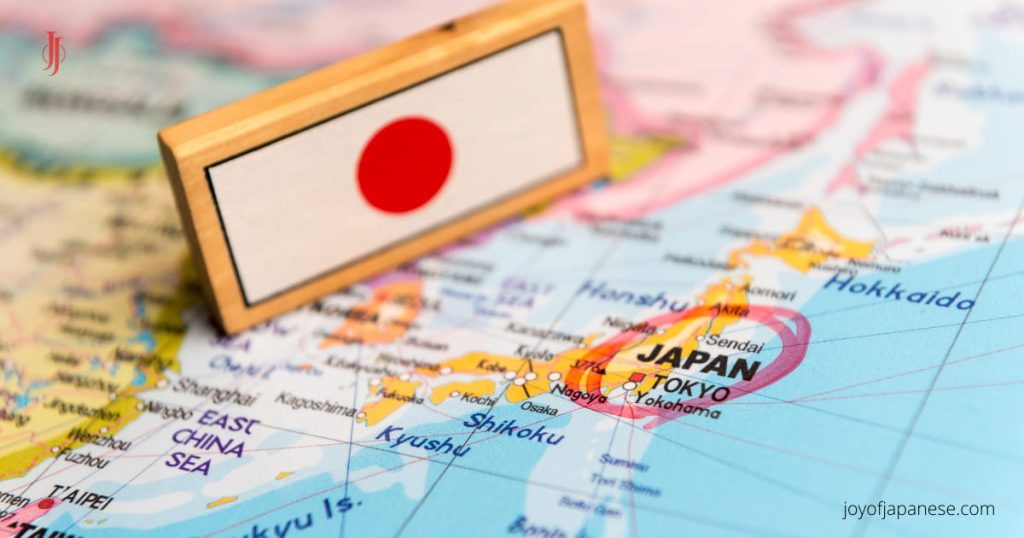
Speaking of countries seeking expansion, one cannot miss Japan, “The Land of the Rising Sun.” The reasons are natural. Japan is synonymous with advanced technologies, innovation, and a high-productivity work environment.
The island country has seen the need of the hour. As a result, many Japan-based enterprises have opened offices and branches worldwide.
The local language would be the internal medium of internal communication. There sure is an advantage for those who speak Japanese well.
It would also expand growth opportunities and reduce the communication gap between the headquarters and the branch office.
Furthermore, career prospects for Japanese people exist in the Japanese economy and job market.
You will see that an international job market would have opened up for you. This is because recruiters will look for people who speak both Japanese and English.
This bridges their communication gap with the international scenario.
19 Dream Jobs That Require Japanese Skills in 2026
The career choices after studying Japanese are certainly worth looking forward to.
The number of people who speak Japanese as a second language is small, and more job roles need those who do. Thus, you would have many opportunities to choose from.
The Japanese work culture and outlook on human relations make all employment options good choices.
Naturally, the question arises: what are the career chances for those who have learned Japanese? What options exist, and what would they entail?
To clarify everything, I have compiled a list of your available opportunities. Here are 19 top careers after learning Japanese.

1. Career as a Japanese translator
Employers and potential employees seek translators. Companies and organizations across industries also seek translators to serve their international clientele.
Since the work concerns formal matters, those who have learned the standard form as in the textbooks will have an edge.
This is perfect for those who learned Japanese at a language school or through textbooks.
There is a growing demand for scientific, self-study, children’s academic, and literary translations. Plus, you can make a career as a proofreader.
Being a translator requires advanced reading and writing skills in both Japanese and English. You can also work with other combinations, like Japanese and your mother tongue.
2. Jobs for Japanese interpreters
If there were a list of popular language jobs, this would probably rank right after translators.
Communication, or lack of communication, is vital in any transaction. Thus, this is an opening with high demand.
The assignment would involve on-the-spot translation, interpretation, thinking, and communication in most scenarios.
Thus, your language skills must be at their best, as if you were a native speaker like JLPT N1, NAT level 1, or a master’s in Japanese.
Being an interpreter, thus, is the best way to keep those language guns blazing.
Becoming a Japanese interpreter broadens one’s career scope, including opportunities to work with the government or a multinational company.
3. Media and subtitle-related work
Japanese dramas and anime are admired and watched worldwide in this era of global media consumption.
J-pop, dramas, and films are a top business with devoted followers worldwide. Yet fans often require subtitles or dubbed versions of these shows because they are not proficient in Japanese.
Media content providers are always looking for fluent English and Japanese transcriptions. This is to cater to their international audiences.
Entertainment businesses also sought multilingual people. This can increase the worldwide following of their stars and artists.
Subtitle transcription will be in high demand as video streaming services increase the amount of content they stream. This is regardless of the languages spoken by individuals of all nations and races.
This would also work the other way around, as Japan has significant English-language shows and content consumption. Hence, proficiency in Japanese is the first requirement for such a career.
4. Japanese language teacher
In today’s environment, the desire to learn a new language is rising among professionals and even youngsters.
The growth of international communication has led people to constantly adapt and stand out to survive the competition.
Consequently, coaching centers and other language-learning institutions are increasingly appearing. This is in addition to hundreds of schools, colleges, and universities that hire Japanese instructors.
Each would seek to recruit candidates who have reached the advanced level to work as trainers or teachers in various roles.
As more students consider educational and career opportunities abroad, learning the language is essential. This is an avenue to explore, as they need a tutor.
Since the spread of COVID, online classes have also become popular. For example, you can conduct classes online or make pre-recorded programs.
5. English teacher in Japan
Various occupations include teaching English in Japan. The most prevalent is working as a teacher in a public school for elementary, middle, or high school students.
University ESL teaching jobs are more complex and require higher qualifications, such as a master’s degree in English or a related field.
There are also many openings for educators who can teach English at private language institutes nationwide.
In local parlance, they are called Eikaiwa, or conversational schools. Because of the performance incentives, teaching English at Japan’s private schools is engaging, encouraging, and fun.
Although all these positions require a bachelor’s degree and a certification called TEFL, it is an excellent chance to travel to and stay in Japan and experience Japanese culture and lifestyle.
6. Political avenues to explore
Candidates for political office might hire political consultants to act as managers and public relations professionals. They usually develop promotional materials and media to educate and enlighten people about their candidates and parties.
A Japanese major can prepare you for employment, requiring you to consult with, advise, and promote Japanese political candidates.
Yet it would mean moving to Japan and having solid experience in a similar field.
Another option would be to be a political analyst.
You would evaluate documents and share your findings and research with legislators, business executives, and other professionals through reports, briefs, and presentations to support various goals.
For example, selling products in international markets, communicating with foreign nationals, and other activities cause an understanding of unfamiliar political environments.
7. Operations head in any corporate office
Many firms and corporations have multiple branches and offices worldwide. As a result, they may engage operations managers to oversee the day-to-day operations at these locations.
Operations managers handle many tasks, including project completion, collaboration with other senior executives, and workforce management.
An operations supervisor who could communicate in Japanese would be vital to the success of a new branch of a multinational firm in Japan.
Because a Japanese office is likely to have many Japanese employees, it is vital to have an operations staff who can speak with them.
8. Jobs in Japanese companies

There are branches of Japanese organizations worldwide. You can work for one.
Japanese companies can hire you for a variety of skills. The list is endless: Yamaha, Toyota, Honda, Toshiba, Sony, Suzuki, Canon, Fujitsu, Panasonic, Casio, Mitsubishi, and Daikin.
You are good to go once you have the required primary qualifications.
Various roles can be filled by a degree in mechanical engineering, an advanced diploma in graphic design, a master’s in IT, an MBA in marketing, or a simple graduate degree.
Your Japanese skills will put you far ahead of people who cannot speak the language but have more qualifications.
You can work for companies that do business with Japanese MNCs in sectors like engineering, automobiles, IT, animation, consumer goods, entertainment, and games.
9. Analyst or data curation
Research and development are crucial for any business’s survival in today’s market. Your job would be to help the entity understand and assess the market and competition.
In an international context where rivalry cuts across national borders, it’s critical to understand information in multiple languages.
Knowing Japanese will help your career as an analyst for any company that competes in the Japanese language.
For example, a career as a research analyst might be a great fit if you enjoy research and have strong Japanese reading skills.
10. Marketing and sales
Worldwide marketing is becoming increasingly important, especially for products with a global audience. Thus, as a marketing specialist, you would focus on expanding a brand’s presence in foreign markets, such as Japan.

The Japanese language is necessary for this function if a company or brand wants to market its goods in Japan.
You may need to live in Japan to successfully oversee a company’s marketing team. Thus, you must be fluent in both written and spoken Japanese.
There has recently been a surge in the need for sales executives and agents in Japan.
So there are plenty of prospects for you to get high-paying work as a sales professional in Japan’s import-export market if you know the Japanese language.
11. Customer Service Management
Customer service managers oversee and guide teams and respond to client and customer inquiries, issues, and conflicts.
As a customer service manager, you can work for firms that serve clients globally, where having a second language is helpful.
Suppose you want to work in sales, customer support, or client account management for an international company. Then your knowledge of Japanese can help you succeed.
You would also be an advantage as they would not need translators to communicate with local offices. It would help them boost sales and increase their customer outreach.
12. IT and Software
Known for its advanced technology and complex software, Japan is a leading destination for IT and software careers.
Because of their soon-depleting workforce, many Japanese corporations have explored other options. This includes India to gain talented labor. Hence, this is your chance to get the best outcome in this sector.
You could choose to work in India or Japan. Either way, the Japanese IT sector provides plenty of opportunities. It is for freshers and seasoned professionals alike.
Further, there is a growing need for software engineers in Japan. So, if you want to work as a software engineer in Japan, your chances of getting employed are good, especially if you understand the language.
13. Tourism and hospitality
Tourism has a significant role in the economies of most nations.
This is compounded by the hospitality and management of the tourists who visit. Thus, multilingualism could be a considerable advantage in breaking into this industry.
Since you would act as a tour guide for tourists, you would be a highly valued employee in any tourism business.

Hospitality will involve more detailed conversation, providing the perfect chance to show off your Japanese skills. You can work in hotels, resorts, leisure facilities, and places linked to or attracting Japanese visitors.
14. Working in an embassy
Communicating in English and Japanese will be highly valuable, as it will allow you to work at embassies in any country. Both countries’ embassies are almost certain to be present in the other country.
Because embassies address issues that affect both nations and peace, they seek professionals who can communicate in both languages.
And those who can bridge the communication gap to maintain efficient processes.
Diplomatic agents or government representatives could find a chance to work in foreign countries. They represent and mediate between their home countries and the places they travel.
Being a staff member would require you to assist with international talks frequently. Your language abilities as a Japanese major can help you thrive in a diplomatic capacity, especially if you go to Japan for employment.
15. Aviation sector and Flight attendants
Tending to passengers is the primary role of a flight attendant. Since the passengers would be diverse, having a decent Japanese language ability could help you secure a career as a flight attendant.
Speaking to passengers in their native language can help you connect with them more personally and better understand their needs.
This will help boost your reputation in your field.
A company that shuttles between the USA and Japan would prefer to hire someone who speaks Japanese.
Therefore, many airlines seek Japanese-speaking ground staff. So, Japanese learners can profit significantly from these careers.
In addition, there are positions for customer service, airfare & ticketing staff, pilots, transport officers, logistics, immigration officers, etc.
16. Blogging about Japan & Japanese
Do you understand Japan and related topics well, and do you have a flair for superb writing?
In that case, you could earn a living as a freelance blogger.
You can write about anything from the Japanese language to food, education in Japan, travel, J-pop, culture, and movies.

Blogging offers many benefits.
You will first create content about Japan and the Japanese language, something you are passionate about.
You can also work whenever and wherever you wish. Plus, you can also earn a decent income.
Your blog can earn money with affiliates, advertisements, and sponsored reviews—you have many options! Another way to make money is to sell courses and promote third-party products.
You can share your passion for Japanese through your blog as a professional who speaks the language.
A ton of hard work is required to be successful.
High-quality content and a large audience are essential. However, bloggers usually wait a few years to see any significant return.
Then, you will be able to take advantage of many opportunities.
17. Content Creator
Content development may be lucrative, depending on the quality and the extent of one’s involvement with customers.
Creating content that is relatable to English and Japanese speakers will give you access to a much larger global audience.
Depending on your area of expertise and interest, the content might take the shape of social media interactions, blogs, vlogs, and more.
You’d be letting your creative side flow. As a result, it’s a decision worth considering.
18. Career as a Japanese YouTuber
Those who aren’t camera-shy can also have a YouTube channel.
YouTube is the undisputed king of online video. People worldwide can express their creativity by creating media content on this platform and making money.
Is there a way I can make money?
As a YouTuber, you can introduce your viewers to various aspects of Japanese culture. Furthermore, you can sell products and services in addition to creating “how-to” videos.
Affiliate marketing, advertisement, and promotion can also earn you money.
The number of views and Google Ads displayed during videos determines how much money you can make per video.
You can achieve this by having many visitors and uploading videos regularly. Still, because of intense competition, you will also need patience.
You can start this as a part-time job. Then, once you have a good return, you can consider becoming a full-time Japanese Vlogger.
19. Export houses and international businesses
Are you interested in automobiles, semiconductors, computers, consumer electronics, manufacturing, steel, construction, and related industries?
If that’s the case, learning Japanese increases career options.
International sales professionals sell goods all over the world. Knowing Japanese allows you to do business in Japan.
Having a foreign language skill is an asset in international sales and marketing. Global sales marketers deal with B2B companies, so they face many challenges.
Salespeople who can negotiate with cross-border companies can be effective. They also appreciate salespeople who can talk with clients, suppliers, and business partners.
There will be many chances for you to travel abroad. You will also earn a handsome salary as a foreign sales manager.
Final Words on Careers in Japanese
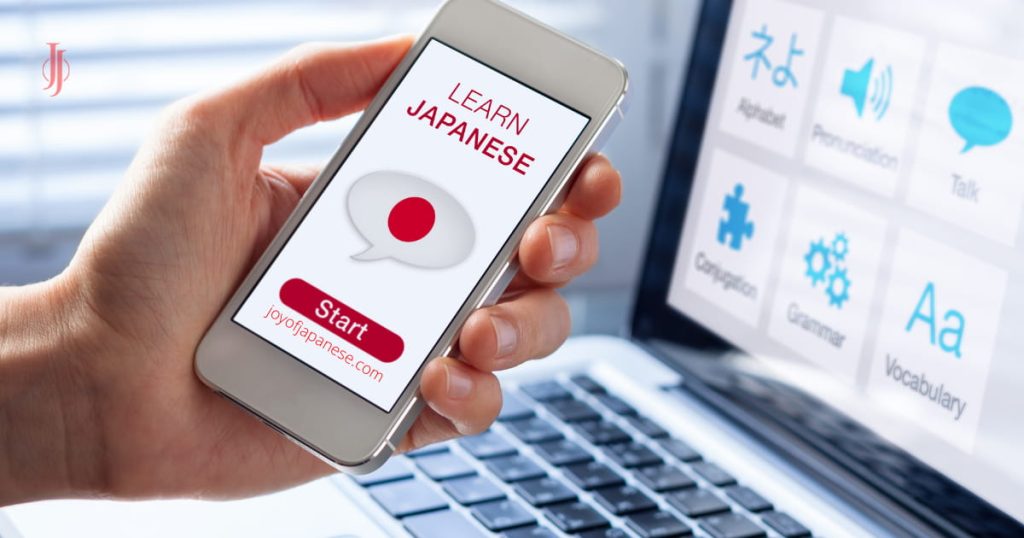
Studying Japanese can lead to a wide array of career choices.
Your Japanese skills can help you in the workplace once you achieve a certain level of proficiency. For example, at least JLPT N3, if not N2 or N1.
You can use your Japanese skills professionally. You can combine your existing skills with language or pursue a career in Japanese.
With so many options, I believe it will encourage you to brush up on your Japanese skills and choose the one that best suits your needs.
Regardless of which path you choose, you will have a successful career. Learning Japanese has a lot to offer. Besides, working in Japan or at a Japanese-based company near you may be an exciting experience.
Is there something you would like to ask or share with me? Feel free to do so in the comment below.









I want to learn either online or offline Japanese language for only communication purpose.
Wish you good luck. There are 100’s of options to choose from.
What is the best way to practice Japanese while learning?
Practice with natives or those who speak well, listen to audio lessons, podcasts, videos, written excesrises, short paragraph, etc.
How long it will take one to go from JLPT N5 to JLPT N3 if seriously pursued.
Duration varies depending on many factors, but from zero to N3 takes around 2 years.