


There are many good reasons to learn Japanese, but many people hesitate to take the plunge. Don’t let the hiragana, Katakana, and kanji scare you! Please read this article to find out why you should study it.
Learning a language is always a good option. It is fun and challenging, and it can give you a fresh perspective on your thinking and ideology, opening a portal into another world.
It is also said that learning a new language can sharpen memory and improve cognitive thinking. In the most obvious way, it helps improve communication skills.
As an added advantage, it can make a good impression on others, making the learner appear bright and engaging.
Given the benefits of language learning, learning Japanese can be even more worthwhile. It is a new journey with assured positive outcomes.
Table of Contents
- 16 Top Benefits of Learning Japanese in 2026
- 1. You can communicate with over 125 million speakers
- 2. For the love of Japanese food
- 3. Japanese helps us learn other East Asian languages
- 4. Good for memory and health benefits
- 5. A gateway to an incomparable cultural universe
- 6. Increased career prospects
- 7. Job opportunities in Japanese companies
- 8. Japanese will set you apart from the crowd
- 9. Personal growth
- 10. The international spread of the language
- 11. Teach English in Japan
- 12. Higher study in Japan
- 13. You want to visit Japan at least once
- 14. Improves networking
- 15. Open yourself up to new music and entertainment
- 16. Japan is the land of inventors and innovators
- Wrapping Up: Should You Learn Japanese?
16 Top Benefits of Learning Japanese in 2026
Japan is a developed and beautiful country with much to offer in terms of culture, career, entertainment, and lifestyle.
Need some motivation and inspiration to learn Japanese? You’ve come to the right place.
Here, I will outline the 16 most compelling advantages of learning Japanese. So, let’s get the ball rolling!

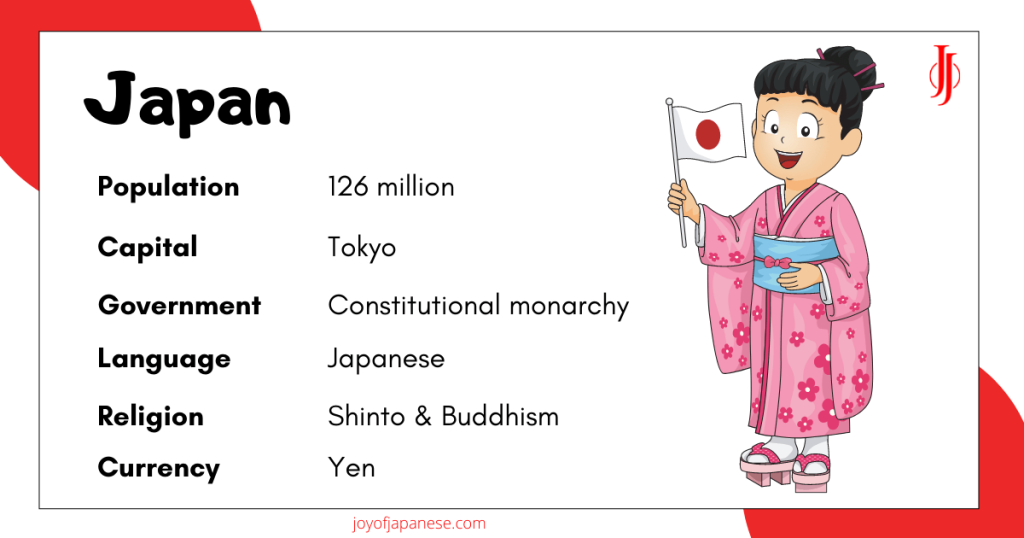
1. You can communicate with over 125 million speakers
According to the 2025 Ethnologue, more than 125 million people speak Japanese as their first language. This makes Japanese the 9th most spoken native language in the world.
Considering there are currently 7,151 languages spoken around the globe, that’s pretty high on the list.
Japan is the only country where Japanese is the official language. So, nearly 99% of native speakers live in Japan.
There are sizeable Japanese diasporas in Brazil, Canada, the US, China, the Philippines, and many others. In addition, around 5 million people speak Japanese with some proficiency outside of Japan.
Learning Japanese allows you to communicate with 130 million more people and connect more deeply. Additionally, since it is widely taught, you will engage with many learners worldwide.
OK, you might think, that’s just a number. You could apply it to any famous language. But why would anyone want to engage with Japanese speakers in particular?
First, Japan is a developed, technologically advanced country with many large companies. Second, it has a rich history, beautiful places, and a colorful culture.
Japanese people are also among the friendliest and most courteous.
Learning Japanese gives you access to a vibrant and exciting community.
You can chat with them about any never-ending intriguing topic, from Karaoke and Sushi to Origami and Samurai to Sudoku and Manga.
2. For the love of Japanese food
Is there anyone who does not enjoy delicious food?
Japanese cuisine is famous worldwide, and the reasons for this are clear. It is unique, delightful, nutritious, and fresh, offering healthy, tasty food items. Also, the presentation is always outstanding.
Sushi, a traditional Japanese dish, is a delicacy enjoyed worldwide.
Samen, Ramen, Tempura, Kare-Raisu, Sushi, Okonomiyaki, Miso Soup, Yakitori, Shabu Shabu, Onigiri, and Udon are hearty and delicious reasons to learn Japanese.
Are you a die-hard fan of mouthwatering food? If so, knowing the original language is beneficial for enjoying them thoroughly. You don’t need to be fluent, but a basic understanding will go a long way!
The dishes, recipes, ingredients, and food-related vocabulary and phrases help you learn new things about the language. You also know a lot about Japan and its culture through Japanese cuisine.
3. Japanese helps us learn other East Asian languages
Most East Asian languages, such as Korean, Chinese, Japanese, Mongolian, Thai, Bahasa, and Vietnamese, are distinct. This is because they all belong to families with different languages.
Still, some of these languages share features due to their geographic proximity, social contexts, and histories.
For example, Korean and Japanese grammar is identical to some extent. Honorific terminology is prevalent in both languages to show respect. They also share many vocabulary items, SOV word order, and sentence-structure rules, and both use markers.
Likewise, the Japanese use the Kanji writing system derived from Chinese characters. By doing so, you will take a step closer and get the benefit of learning Chinese.
Many words are also derived from or similar to those in Japanese, Mandarin, and Korean. This would provide a solid basis for further exploration of the language paradigm.
To sum up, once you achieve reasonable fluency in Japanese, you can have an advantage in studying Korean or Chinese.
There is a difference in the writing system: Koreans use Hangul, while the Japanese use Kanji (Chinese Hanja). Yet Japanese differs from Chinese in its speech sounds, tones, and native vocabulary.
Based on my interactions with experts in these languages, I concluded that Mandarin, Japanese, and Korean share roughly 20% of their vocabulary. This is not much, but it is better than having nothing in common.
4. Good for memory and health benefits
Learning a new language engages the brain in many ways and helps to increase brainpower.
For example, studies prove that bilingual or multilingual people are better at critical and analytical thinking. This means learning Japanese can make people more competent and more analytical.
Japanese is a complex language. And that’s why many studies suggest that learning Japanese uses more brain parts than other languages. This increases your mental abilities and memory.
Bilingualism can make you more effective, more focused, and better at prioritizing and multitasking. To put it simply, it enhances your cognitive skills.
A distinctive feature of the Japanese language is the variety of strokes, writing styles, and methods. That helps make it a more valuable tool for exercising the mind.
You can challenge yourself more with a unique and tricky language like Japanese. This will surely keep your brain active for good.
This is why knowing a language like Japanese sharpens your brain, increases innovation, and improves your health.
5. A gateway to an incomparable cultural universe
Language learning isn’t just about the alphabet, vocabulary, and grammar rules. This would also include the rich culture rooted deep within it.
Understanding the culture and language together makes experiences even better. This is because they mutually elevate one another and act as catalysts. This makes learning Japanese a new, adventurous, and otherworldly experience.
Japan has a storied history and an intricate culture, reflected in its language, phrases, idioms, slang, and dialects.
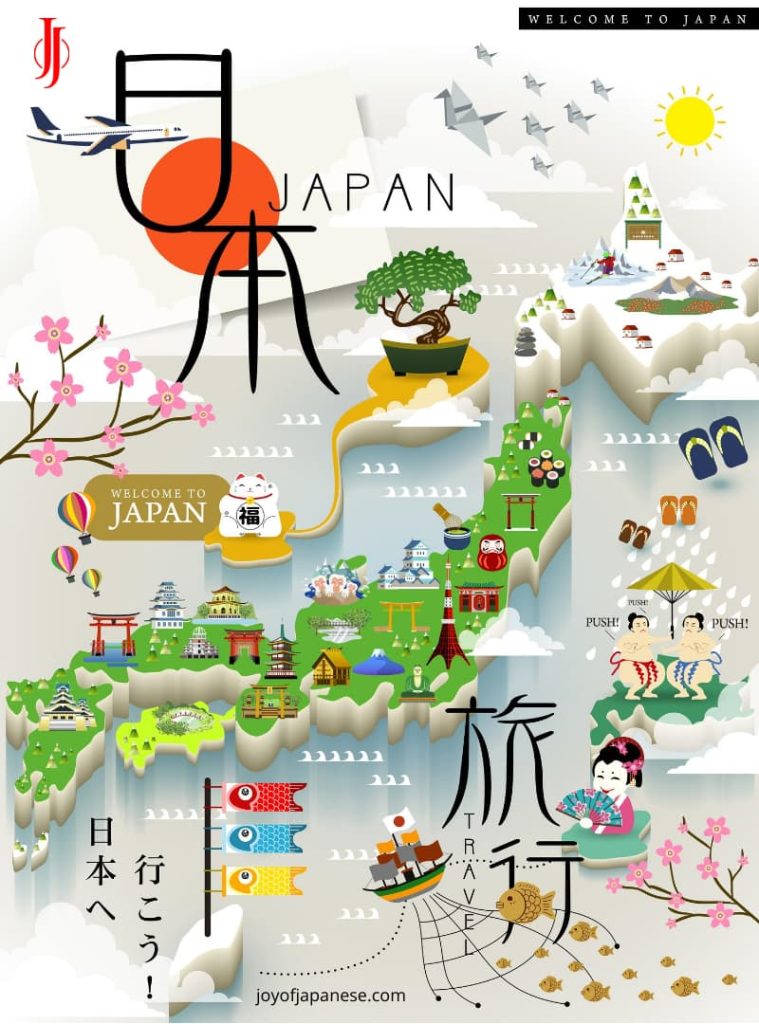
Japanese culture is unique and a perfect mixture of tradition and modernity. The ability to speak Japanese opens a window into one of the world’s most fascinating, multicolored, and ancient civilizations.
Studying Japanese would also require immersion in the culture to understand the language’s traditions and development.
This means that, as with any new culture, learners will explore Japanese customs, almost as if they were entering a parallel universe.
6. Increased career prospects
This is likely the primary reason for learning Japanese.
You may have a better chance of getting hired if you know a second language. This will also allow you to negotiate higher salaries. Thus, speaking Japanese is valuable for your career.
A variety of careers are available across many industries. These include automobiles, semiconductors, animation, consumer electronics, copper, iron and steel, manufacturing, construction, shipbuilding, computers, optical media, R&D, fishing, finance, entertainment, and many more.
Translators and interpreters are the two most meaningful opportunities. You can work for companies that serve international clients; as a result, they are highly sought after in Japan and worldwide.
You can be a teacher, tour guide, customer executive, marketing or sales executive, or content writer with a good understanding of Japanese. Plus, you can find employment in the vast tourism, hotel, and leisure businesses.
These provide excellent career scope in Japanese. So, having this on your CV is always an asset when you try to get a job in these sectors.
7. Job opportunities in Japanese companies
With the global market expanding and globalization, many Japanese companies have established corporate or local offices in various countries. They are doing this to grow their business and build skills.
Japan is known for its advanced technology and highly productive work culture. As a result, multiple players have established offices and branches worldwide.
Although the local language would be the primary medium of communication, Japanese can provide an advantage in recruitment.
It would also expand growth opportunities by reducing the communication gap between the headquarters and the branch office.
Further, it expands career prospects in the Japanese economy and the job market. It opens up international job opportunities by giving learners an excellent chance to be hired by Japanese companies.
8. Japanese will set you apart from the crowd
When learning a new language, most people prefer European languages such as French, Spanish, Italian, or German.
Only a few select a language, such as Japanese. But this isn’t because it’s uncommon. Instead, it’s because it’s difficult and not widely spoken.

Although it is a recognized language, Japanese is not widely taught globally. As a result, there is limited access to Japanese language education and resources.
When you learn a less-famous language like Japanese, you will have something rewarding to add to your resume. You can take Japanese tests such as the JLPT or the NAT to enhance your CV.
Proficiency in Japanese would set the learner apart from the other multilingual crowd. This is because there would not be as many of them as those speaking other commonly taught languages worldwide.
This would mean that a person learning Japanese would be in high demand in the job market, thereby boosting opportunities.
To elaborate on the previous point, a Japanese-speaking person is highly valued internationally. However, an English speaker who can speak Japanese would also be pretty valuable in Japan.
You have access to a whole new world and can become an asset in your personal and professional life. Plus, it will set you apart, since very few people speak well, at least with high fluency.
9. Personal growth
The Japanese language can help you become a better listener and thinker, and express your ideas clearly and creatively. It will also give you a broader, more global, parallel, or opposite perspective.
For example, the learner’s native language may differ from Japanese or from native English, making the learner more sensitive to and accepting of others’ views.
This would be a milestone to add to one’s personal values and growth.
Learning a new language also requires time and discipline. It is a tedious task that requires an exemplary time commitment. Therefore, learning Japanese will instill discipline in the learner.
It will be a productive use of time and help the learner to spend their time more productively. Also, being multilingual improves a person’s ability to multitask.
It enables one to think in multiple languages and supports better decision-making. Learning a new language also improves the learner’s native language and helps them better understand their culture and language.
Finally, it gives learners a sense of accomplishment from learning a new language and, in some cases, even helps them ace it.
Learning Japanese could be a great addition to personal growth and value.
10. The international spread of the language
Japan is the third-largest economy in the world, with a vibrant global presence. It has affected many countries through trade relations, technological advancements, and exported items.
Japanese technology and products hold a strong presence in the global market. As a result, Japanese is an internationally acknowledged and recognized language.
Learning Japanese can be like adding a feather to your cap in the global market, as it enables communication with major Japanese players.
Interacting with them in their language would help you earn brownie points and improve the ease and clarity of communication. Plus, it can support financial markets and facilitate easier trading.

11. Teach English in Japan
There are many jobs available for non-native Japanese learners.
For example, working as an ESL (English as a second language) teacher is the most sought-after among foreigners in Japan.
Likewise, demand is relatively high due to globalization. This includes the need for the English language as a communication tool.
Many Japanese people want to learn English to compete in the international market. Thus, there is always a demand for English teachers in Japan.
They regarded teachers in Japan as elders.
This means you enjoy a special status that allows you to discover valuable and highly unusual cultural traits.
Thus, learning Japanese would be a strong stepping stone toward expanding career opportunities.
12. Higher study in Japan
Japan is known for its well-developed and well-researched education system. Year after year, it invents and manufactures new technologies and goods with precision and distinctiveness.
It also lists over 750 universities, covering a diverse range of disciplines.
According to the Organization for Economic Co-operation and Development, Japan’s education system is of high quality, with students ranking first in mathematics and second in science.
Japan is also recognized for producing outstanding academics, Nobel laureates, and business tycoons, demonstrating the country’s high educational standards.
It also prioritizes vocational education alongside academics, making it a well-rounded, balanced option. Learning Japanese is the first step for studying as an international or exchange student in Japan.
It would help you integrate more quickly, enabling a more productive exchange of information and a better understanding of academics and other areas. Thus, it is unmissable for those wishing to pursue study at a Japanese educational institution.
13. You want to visit Japan at least once
Japan is a very homogeneous country in terms of language and culture. They write everything in Japan naturally, and everyone communicates only in Japanese.
It is rare to find an English signboard or an English-speaking street vendor. As a result, it is tough for a non-Japanese person to navigate or communicate in the city using only English.
Learning the basics before moving to or even visiting the city would be vital. A decent grasp of the local language will always help you feel more welcome and connected to the people. This makes the experience more memorable and fulfilling.

The list of tourist destinations is extensive, including Jigokudani Snow Monkey Park, charming villages, ancient temples, modern Tokyo, sunny beaches at Jodogahama, the iconic Mount Fuji, and the magical Osaka Castle!
Japanese people take great pride in their culture and language, as do people in many other countries. Thus, they would be more inclined to help the learner and make them feel at home if the conversation started in their native language.
They would likely even offer to help improve their language skills.
This would greatly help in a new place; thus, studying Japanese could benefit those wanting to move to or visit Japan.
14. Improves networking
Learning Japanese could be very useful in building networks. Opening with a Japanese phrase or idiom suited to the context is always a great conversation starter.
It also projects the image that the learner is highly accomplished and intelligent. This would enhance networking and connectivity.
In addition, people subconsciously perceive someone speaking in a foreign language as approachable and more human, making them seem very approachable.
It helps us feel connected and have extensive networks that immensely contribute to our work and personal lives. It enables ease of communication. Finally, it improves understanding, as each language has features that will enhance it.
Learning Japanese can thus improve communication and connections on networks, making one feel included and part of the international community.
It helps build connections with new people, making it highly beneficial to learn.
15. Open yourself up to new music and entertainment
Studying a language such as Japanese opens up a new world of engaging media.
You can watch movies, TV series, and anime, read literature, comics, and manga, listen to music like J-pop, and play games. And the list of top-quality entertainment content is endless!
J-pop, i.e., Japanese popular music, isn’t just another trendy and modern music. Instead, it is a mesmerizing experience that will take you to something you can only dream of.
Although J-pop may not be as popular as K-pop, it has a significant global fan base. Listening to J-pop can also help you learn Japanese because it uses the casual yet practical language needed to hold conversations.
Japanese movies will open your knowledge and help you learn about rich Japanese culture as part of your language study routine.
The films for Japanese learners allow you to hear and understand how the language is spoken in its natural context. From there, you can figure out what body language is all about.
With Japanese manga and anime taking the internet and video platforms by storm, it can be a fantastic investment of time.
Once you gain at least intermediate-level Japanese skills like JLPT N3, you can watch comics and cartoons to dive deep into the world of J-animation.

16. Japan is the land of inventors and innovators
In addition to being geographically isolated, Japan is densely populated and has limited natural resources. Despite that, Japan is one of the strongest economies in the world. That is a remarkable achievement by any means.
We know Japan for its top-notch products.
Many Japanese brands, such as Sony, Toshiba, Sanyo, Casio, Canon, Honda, Toyota, and Mitsubishi, have established a global presence by committing to high-quality products that meet international standards.
The Japanese have developed efficient, eco-friendly approaches to economic success through their creative and scientific ideas.
The government also encourages companies, including SMEs and start-ups, to develop new, how-to, and innovative concepts to deliver solutions to the world.
Japan’s high-tech companies are leaders in optical media, fermentation, semiconductors, IoT & IA, and industrial robotics.
The Japanese strive for innovation. This has led to many yearly patent applications, making them one of the world’s leaders in patent filings.
Wrapping Up: Should You Learn Japanese?
Japanese is a beautiful language with nothing but incentives for those willing to learn it.
It is an excellent chance to try newer things and challenge yourself to make a difference. With a bit of time investment and the curiosity to learn, you can reap magnificent benefits after learning Japanese.
These were some of the obvious benefits that I wanted to highlight. But, of course, I know this is just the tip of the iceberg when it comes to learning a new language.
Why do you want to learn Japanese, and what excites you most?
I’d like to hear from you. Please share your feedback or any questions in the comments below.









I want to learn Japanese to be able to speak to my in-laws and other family members from my wife.
Recently, I fell in love with the language. It’s drawing in much of my time learning it that’s why I was searching possible reasons to continue learning the language. Thanks to you, I am now solid to the language and I will learn it to perfection. Deep in my heart I have always wanted to visit Japan. Maybe that’s why, but I will soon find out.